

There’s nothing like the feeling of bringing home a gorgeous pre-owned designer bag from Board of Trade. But now that it’s yours, how do you keep it looking incredible?
The secret to caring for a leather bag isn't complicated. It really just comes down to a simple, consistent routine: gentle cleaning, regular conditioning, and smart storage. Following these steps will help you prevent cracking, fading, and stains, making sure your investment holds its value and style for years to come. Ready to dive in?
Protect That Designer Find
You didn’t just buy an accessory; you made an investment in timeless style. Whether you snagged the perfect women's designer consignment piece in our Roswell store or a classic from our men's selection, that bag deserves the right care. Just like any smart investment, a little upkeep goes a long way.
This guide is your complete playbook, packed with practical, easy-to-follow advice. We’ll show you everything from daily wipe-downs to long-term storage, helping you preserve the kind of quality you’d expect from a boutique in Downtown Alpharetta, but at unbeatable consignment prices.
Why You Gotta Care
Think of this as the owner’s manual for your luxury leather. Following these tips ensures your finds from our Roswell consignment shop remain stunning, whether you’re a seasoned collector in Milton or a first-time designer buyer from East Cobb. It’s how you keep that pre-owned designer fashion looking fresh.
Good habits have a direct impact on your bag's longevity and future worth. Protecting the leather not only keeps it looking great while you carry it but also preserves its high resale potential if you ever decide to refresh your wardrobe. Drop by and browse our racks to see what well-cared-for pieces look like!
When the time comes to update your style, knowing where you can sell your designer bag for the best return makes all the difference. A well-maintained bag always commands a higher price.
Ultimately, caring for your bag means you get to enjoy a beautiful, high-quality piece that stands the test of time. It’s a sustainable choice that lets you appreciate designer craftsmanship while making a smart financial decision. Ready to get started?
First: Know Your Leather
Before you even think about cleaning or conditioning that beautiful designer handbags consignment find, you need to play detective. Is it a buttery-soft lambskin? A durable pebbled leather? Or a delicate suede? Using the wrong product is the fastest way to cause irreversible damage, so figuring this out is your first and most important line of defense.
Think of it like skincare—you wouldn't use a harsh scrub on sensitive skin, right? The same logic applies here. Every type of leather has its own unique personality and needs a specific care routine to stay looking its best. Getting this step right is everything.
Designer Leather 101
From the workhorse durability of a Louis Vuitton Speedy to the structured elegance of a Prada Saffiano tote, luxury brands use a stunning variety of leathers. Many even develop their own signature materials. Knowing exactly what you have is key. For a deeper dive, check out our guide on what Louis Vuitton bags are made of.
Here's a quick reference table for the most common leathers you'll find on the racks, whether you're browsing designer consignment in Alpharetta or scoring a find in Forsyth County.
| Leather Type | Characteristics | Recommended Care Routine |
|---|---|---|
| Full-Grain/Pebble | Durable, textured, and resistant to minor scuffs. You can feel the natural grain. | Wipe with a damp cloth; use a pH-neutral cleaner and condition every 6-12 months. |
| Lambskin | Incredibly soft, smooth, and lightweight. Prone to scratches and stains. | Handle with clean hands. Use a cleaner and conditioner made for delicate leathers. |
| Suede/Nubuck | Soft, velvety texture. Highly absorbent and stains easily. | Never use water or cream cleaners. Use a dedicated suede brush and eraser for dirt. |
| Patent Leather | High-gloss, plastic-like finish that repels water but can scuff or get color transfer. | Wipe with a damp cloth and buff with a dry one. A patent-specific cleaner removes smudges. |
| Vachetta Leather | Untreated, natural leather that develops a unique dark patina over time. | Extremely sensitive to water and oils. Protect when new; allow it to age naturally. |
This little chart is your cheat sheet for keeping that bag in pristine, consignable condition for years to come.
Build Your Care Kit
You don't need a professional workshop to care for your bag—just a few key items. Having the right tools on hand makes maintenance a breeze and will handle about 90% of your care needs.
- Microfiber Cloths: Get at least two. Use one for cleaning and one for buffing. They’re gentle and won’t leave lint behind.
- Soft-Bristled Brush: A horsehair brush is the gold standard for gently dusting away dirt from seams and hardware without a single scratch.
- pH-Balanced Leather Cleaner: Look for a gentle, water-based formula. Stay far away from harsh soaps or all-purpose household cleaners.
- Quality Leather Conditioner: This is non-negotiable. It feeds the leather, replacing its natural oils to keep it supple and prevent cracks.
Keeping your bag conditioned is a big deal. It can extend its life by up to 50%. Leather is a skin, and over time it loses its natural oils. UV rays and moisture absorption are responsible for about 70% of visible wear in the first two years if a bag is left untreated. Always start with that pH-balanced cleaner—harsh soaps strip essential oils and can damage 40% more fibers than a specialized formula. If you want to dive deeper into the market, you can discover more insights on Market.us.
Always Do a Patch Test
I can’t stress this enough: never apply a new product to a visible part of your bag without testing it first.
Find a small, hidden spot—like the underside of a strap or an interior leather tag. Apply a tiny amount of your cleaner or conditioner with a cotton swab and let it dry completely. If you see no discoloration, darkening, or damage, you’re good to go.
This simple five-minute check can save you from a major headache and protect the value of your investment. It’s the confidence boost you need to properly care for any designer piece, whether it's a vintage Chanel from a Forsyth County estate or a modern Gucci tote you just brought home.
Your New Cleaning Routine
This is where the magic happens. If you do one thing for your designer bag, make it a consistent cleaning and conditioning routine. This isn't about scrubbing away with harsh chemicals; it’s a gentle, restorative process that literally feeds the leather, keeping it looking like it just left the boutique.
Think of it as a spa day for your handbag. A little time and care every few months will prevent the dryness and fading that lead to permanent cracks and damage. You're not just cleaning your bag; you're protecting your investment. Stick to this—identify, test, and choose—and you’ll avoid those costly, heartbreaking mistakes from the get-go.
Step 1: Prep Your Bag
Before a single drop of cleaner touches your bag, you have to do the prep work. This is a non-negotiable first step that keeps you from grinding existing dirt and oils deeper into the leather's pores.
First, empty everything out. I mean everything. Check every single pocket and zippered compartment, then turn the bag upside down and give it a gentle shake. You’d be shocked at what can accumulate in the corners.
Next, grab a soft-bristled brush (horsehair is perfect for this) and give the entire exterior a gentle dusting. Don’t forget the seams, hardware, and any creases where dust loves to hide. This quick pass removes all that surface-level grime that would turn into a muddy mess the second you add liquid.
Step 2: Clean It Gently
With the bag prepped, you're ready to clean. The secret here is using the right tool for the job. You need a pH-neutral leather cleaner—anything too acidic or alkaline will strip the leather’s natural oils and ruin its protective finish.
Apply a small, pea-sized amount of the cleaner onto a clean, damp microfiber cloth. Never apply it directly to the bag.
Work in small, gentle circular motions. Your goal is to lift the dirt off the surface, not to soak the leather.
Pro Tip: Tackle one panel at a time. Clean a small section, then immediately wipe away any excess cleaner with a separate, dry microfiber cloth. This prevents the leather from absorbing too much moisture, which can cause water spots and stiffness.
Remember, less is always more. You can always do a second pass on a tricky spot, but you can’t undo damage from using too much product or scrubbing too hard. For a deeper dive, this expert guide to cleaning and maintaining leather is a fantastic resource.
Step 3: Condition and Moisturize
If cleaning is like washing your face, then conditioning is the moisturizer. This is the step that puts back the essential oils that leather naturally loses over time, keeping it flexible, soft, and resistant to cracks. A well-conditioned bag has a beautiful, subtle sheen—the hallmark of healthy, hydrated leather.
Make sure your bag is completely dry from the cleaning (give it at least an hour), then you can start conditioning. Just like the cleaner, apply a small dab of a quality leather conditioner to a fresh microfiber cloth.
Work the conditioner into the leather with those same gentle, circular motions, applying a thin, even layer across the entire bag. You're aiming to nourish it, not slather it. Let the conditioner sit and soak in for about 15-20 minutes.
Finally, take one more clean, dry cloth and buff the entire bag. This removes any excess product and brings out that gorgeous, healthy glow. Your bag will look incredible and be far better protected from the elements.
How Often Should You Do This?
Your conditioning schedule really comes down to your local climate and how often you carry the bag. Here in the Northern Atlanta suburbs, humidity is a big factor we have to consider.
Here’s a good starting point:
- For daily-use bags: A full clean and condition every 3-6 months is a solid routine.
- For special occasion bags: Once a year is usually plenty to keep the leather healthy while it's stored.
Living in a humid area like Roswell or Marietta means leather is constantly pulling moisture from the air, so you might not need to condition it as often as someone out in a dry, arid climate. Just paying attention to how the leather looks and feels is your best guide. If it starts to look dull or feel a bit stiff, it's telling you it's thirsty.
This simple routine will keep your pre-owned designer finds looking incredible, whether you're in Milton or East Cobb.
Quick Fixes for Spills and Scuffs
Let's be realistic—no matter how careful you are, life happens. A sudden coffee spill, a leaky pen, or an accidental scrape against a brick wall doesn't have to be a catastrophe for your favorite bag.
The real secret is knowing how to act quickly and correctly. A little bit of know-how can save you a trip to a specialist and, more importantly, protect the value of your gorgeous designer finds. This is your first-aid guide for those heart-stopping moments.
The #1 Rule: Act Fast
When it comes to spills, time is absolutely not on your side. The longer a substance sits on the leather, the deeper it seeps into the pores, making it exponentially harder—or even impossible—to get out.
The second a spill happens, fight that instinct to rub it frantically. You’ll only spread the stain and push it deeper into the material. Instead, gently blot the spot with a clean, dry microfiber cloth or a paper towel. Your goal is to lift the liquid up and away from the surface.
How to Handle Common Stains
Different messes call for different methods. Using the wrong product or technique can easily set a stain for good or strip the finish right off your bag. Here’s a quick rundown for the most common culprits.
Water Spots:
Getting caught in an unexpected Roswell downpour can leave ugly spots, especially on untreated leathers like Vachetta.
- Start by lightly dampening a clean cloth with distilled water. Tap water has minerals that can leave their own marks.
- Gently blot the entire panel where the spot is, working from the center of the original spot outward. This evens out the moisture so the whole section dries uniformly, blending the spot away.
- Let the bag air dry completely. Keep it away from direct sunlight or heat vents.
Grease or Oil Stains:
A stray French fry or a drop of hand lotion can leave a dark, oily mark that seems impossible to fix.
- First, do not use water! It will just spread the oil around.
- Gently pat the area with a dry cloth to soak up any excess oil on the surface.
- Cover the stain completely with a thick layer of cornstarch or talcum powder. Let it sit for several hours, or even overnight. The powder works like a magnet, drawing the oil out of the leather's pores.
- Brush the powder away with a soft brush. If the stain is still there, you can repeat the process.
Fresh Ink Marks:
Ink is one of the toughest stains to tackle, but if it’s fresh, you might have a shot.
- You have to act immediately. A dedicated leather ink-removing stick can sometimes lift a fresh mark right off.
- If you don’t have one, you can very carefully try a cotton swab dipped in a tiny bit of isopropyl alcohol. Dab, don’t rub, and be sure to test it on a hidden spot first. Alcohol can lift the color from some dyed leathers.
For set-in ink, deep grease marks, or any spill from things like red wine or makeup, it’s time to stop. These almost always require a professional touch. Trying to treat them at home with aggressive cleaners will likely cause permanent color loss and damage, tanking your bag's consignment value.
Buff Out Minor Scuffs
Minor surface scuffs are just part of the story of a well-loved bag. For most finished leathers, a simple trick works wonders.
Just use your clean, dry fingertip to gently rub the scuff in a small circular motion. The natural oils from your skin, plus the warmth from the friction, can often be enough to buff out a minor scratch and make it virtually disappear.
This trick works especially well on full-grain leathers that have a bit of oil or wax in their finish. Be more cautious with delicate lambskin or bags with a sensitive finish, like some Louis Vuitton Vachetta leather trim bags. If a gentle buff doesn’t do it, a tiny dab of leather conditioner can help diminish the mark.
Remember, the goal is always to be gentle. These quick fixes are your first line of defense, ensuring your beautiful designer bags stay ready to be shown off anywhere from Milton to Marietta.
Store It Smart
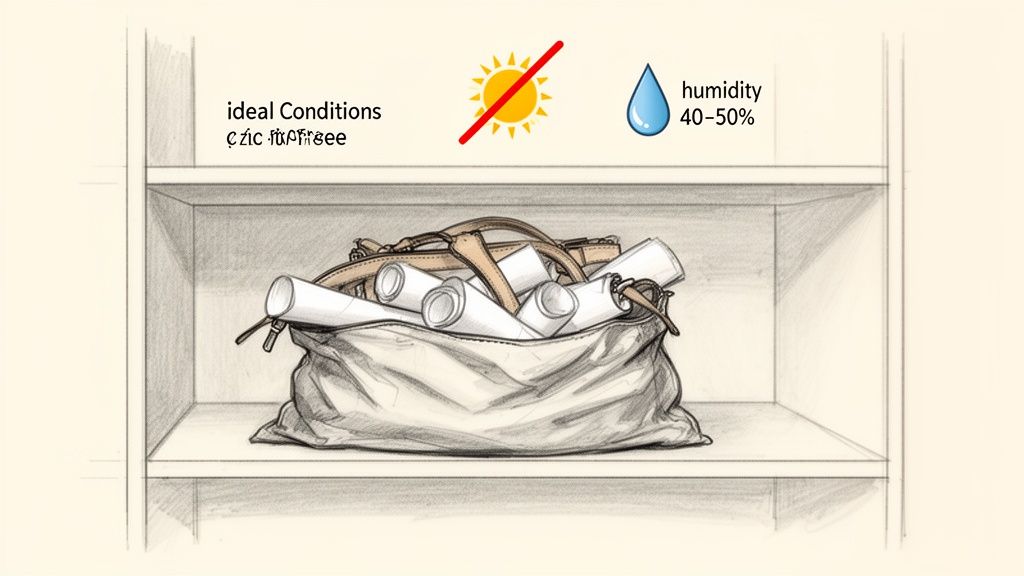
You can clean and condition your bag perfectly, but if you toss it in the closet afterward, you're undoing all that good work. How you store your bag is everything when it comes to long-term preservation. Improper storage is the silent killer of luxury leather, causing warped shapes, faded color, and even mold.
Think of your closet not just as a place for clothes, but as a safe harbor for your investment. These simple habits will dramatically extend its life and, just as importantly, preserve its value for when you're ready to consign it with us at Board of Trade. A bag in pristine condition always commands the best price.
Keep Its Shape
Gravity is not your bag’s friend. Never, ever store a leather bag empty. Over time, even the most structured totes and satchels will start to slump, sag, and develop ugly creases, losing that beautiful silhouette you fell in love with.
The fix is simple. Gently stuff your bag with acid-free tissue paper or a purpose-made bag pillow. This gives it the internal support it needs to stand tall. Whatever you do, don't use newspaper—the ink can easily transfer and stain the lining forever. The goal is to fill it out just enough to hold its shape, not to overstuff it to the point of straining the seams.
Find the Right Environment
Leather is a natural skin; it has to breathe. It reacts to its surroundings, so where you put it to rest is crucial. The two biggest enemies? Direct sunlight and humidity.
- Sunlight is a killer. Those UV rays act like bleach, fading the rich color right out of the leather and drying it out until it cracks. An open shelf in a sunny room is a death sentence for a good bag.
- Humidity is just as bad. That thick, humid air we get here in Roswell and across the Georgia suburbs is a breeding ground for mold and mildew, which will permanently ruin leather.
- Avoid heat sources. Storing your bag near a heating vent or in a stuffy attic is a recipe for disaster. The intense, dry heat will suck all the natural oils out, leaving the leather brittle and fragile.
Your bag’s happy place is a cool, dark, and dry spot with good air circulation. A closet shelf is usually perfect. Just give your bags some personal space—don't cram them together where hardware can cause scuffs or colors can transfer.
Always Use the Dust Bag
That simple cloth bag your designer piece came in? It’s one of your most important tools. Don't toss it.
It serves two key purposes: it shields your bag from dust that can settle into the grain, and it protects it from accidental scratches from nearby buckles or zippers. The breathable fabric also lets air circulate, preventing trapped moisture. If you snagged a pre-owned gem that’s missing its original dust bag, a soft, clean cotton pillowcase works just as well in a pinch.
Getting this right matters. Research shows that a staggering 75% of luxury bag damage comes from improper storage and cleaning. Moisture alone is responsible for mold in 30% of cases, and UV exposure can fade dyes by 15% every year. Keeping it in a dust bag and out of the sun is a simple, powerful defense. You can learn more about the leather goods care market here.
Know When to Call a Pro
Your at-home care kit is perfect for the day-to-day stuff, but some situations just aren't a DIY job. Knowing when to step back and hand your bag over to a professional is one of the smartest things you can do as an owner. It’s often the one thing that separates a simple fix from irreversible damage.
Think of it this way: you can buff out a minor scuff, but you wouldn’t try to patch a deep tear in the leather yourself. A true leather care specialist has the right tools, professional-grade solvents, and years of experience to fix major issues without wrecking the material's integrity. For anyone with a beloved pre-owned designer bag from East Cobb to Cumming, this is a secret weapon in your style arsenal.
Time to Call an Expert?
Some problems are just too big for a simple clean and condition. If you run into any of these issues, it’s time to find an expert:
- Deep, Set-In Stains: We're talking about ink, red wine, or old oil stains that have soaked deep into the leather. A pro can lift those out with solvents that won't strip the bag’s original color.
- Major Color Fading: If your bag has spent too much time in the sun and looks washed out, a specialist can actually re-dye and refinish the surface to bring back its vibrant, original look.
- Torn Stitching or Ripped Leather: Structural damage like broken seams or actual tears needs professional stitching to make the repair strong and practically invisible.
- Broken Hardware: Trying to replace a busted zipper, clasp, or strap ring yourself is a recipe for disaster. It takes the right parts and tools to do it without causing more damage.
The Value of a Pro Deep Clean
Sometimes a bag just needs a complete reset. This is especially true for tricky materials like exotic leathers or for vintage finds that have collected years of life and grime. A professional deep cleaning and conditioning service goes way beyond what you can do at home. They can safely get rid of embedded dirt and restore the leather’s natural oils in a way that brings it back to life.
Investing in professional care isn’t really a cost—it’s protecting your asset. In fact, neglecting a leather bag can cause its resale value to plummet by 60% in as little as 18 months. The right pro service can completely turn that around.
There's a reason the market for these services is growing so fast—savvy owners know that longevity is everything. A single expert clean can restore that soft, supple feel and stop cracks before they start, making sure your bag is ready for whatever comes next. You can read more about the leather goods repair market and see just how big this trend has become.
For our customers across Roswell and the northern Atlanta suburbs, professional care can bring a cherished bag back from the brink and seriously boost its value when you’re finally ready to consign.
Quick Answers to Your Top Questions
Even with a perfect routine, questions are bound to come up. Here at our Roswell consignment store, we’ve heard it all from savvy shoppers across Alpharetta, Milton, and Marietta. Here are the quick-and-dirty answers to the questions we get asked most, so you can feel confident looking after your entire collection.
How Often Should I Actually Clean My Bag?
For a bag in your daily rotation, a quick wipe-down with a dry microfiber cloth every couple of days is all you need to handle surface dust. Think of it as light housekeeping. A real, deep clean with a pH-neutral leather cleaner should happen every 2-3 months to tackle built-up grime.
Conditioning is what keeps the leather from getting thirsty, dry, and cracked. We tell our clients to do this every 6 to 12 months. But remember, your climate is a huge factor. Here in humid Roswell, you can get away with conditioning less often than someone living in a dry, arid place.
Can I Use Olive Oil From My Kitchen?
Please, don't. We hear this a lot, and while those online "hacks" seem easy, they can cause some serious, often irreversible damage to your pre-owned designer pieces.
- Vinegar: It’s far too acidic. It will eat away at the leather's protective finish and leave it totally exposed.
- Olive Oil (or any food oil): These oils will not only darken your bag unevenly, but they'll also go rancid over time (hello, funky smell) and act like a magnet for dirt.
Stick to products made specifically for leather. It’s the only way to genuinely protect your investment. If you're looking for a great resource that covers all the bases, you might find this companion article, How to Care for Leather Bags: A Complete Guide, helpful as well.
Help! My Bag Got Caught in the Rain!
First, don't panic! The trick is to act quickly before water spots have a chance to set. Start by gently blotting—never rubbing—the excess water with a clean, dry cloth. Rubbing can push the water deeper into the grain and damage the finish.
Next, empty the bag out completely. Stuff it loosely with paper towels or an old t-shirt to help it hold its shape while absorbing moisture from the inside. Then, just let it air dry naturally. Keep it far away from direct heat like a radiator or a hairdryer, which will make the leather shrink and crack. Once it's bone dry, follow up with a good leather conditioner to restore all those essential oils it just lost.
Ready to find your next designer piece or consign one of your own? The collection at Board of Trade Fine Consignments offers the quality of Avalon with the value only consignment can provide. Easy to drop-in from Milton, Marietta, Alpharetta, and all the surrounding suburbs, our local, trusted, and curated selection is waiting. Visit us in Roswell today and explore our 10,000 sq ft showroom of designer women's and men's fashion, consignment furniture, and home décor. Find your next designer piece today!