

Whoa there. Before you try to single-handedly shove that antique sideboard across your living room, let's talk strategy. A truly great room layout begins with a solid plan, not a pulled muscle.
It’s a simple truth I’ve seen time and again at our Roswell consignment store: the best rooms are born on paper first. You just need to figure out your room's main attraction, or focal point, and then sketch out a quick floor plan. This little bit of prep work saves you a world of guesswork (and protects your beautiful hardwood floors).
A Good Plan Beats Heavy Lifting Every Time
Just pushing furniture around and hoping for the best is a recipe for frustration. But you don't need a fancy design degree or complicated software to nail this. Honestly, a pencil and a piece of paper are your most powerful tools. Think of it as creating a blueprint for a room that just works—a space that feels balanced, easy to move through, and genuinely inviting.
This planning phase is all about making smart decisions before you move a single thing. It lets you see how people will walk through the space, where you can create cozy conversation spots, and how each piece of furniture relates to the others. It’s the secret sauce that makes a room feel intentional, not just like a collection of stuff.
This simple flowchart breaks down the essential steps.
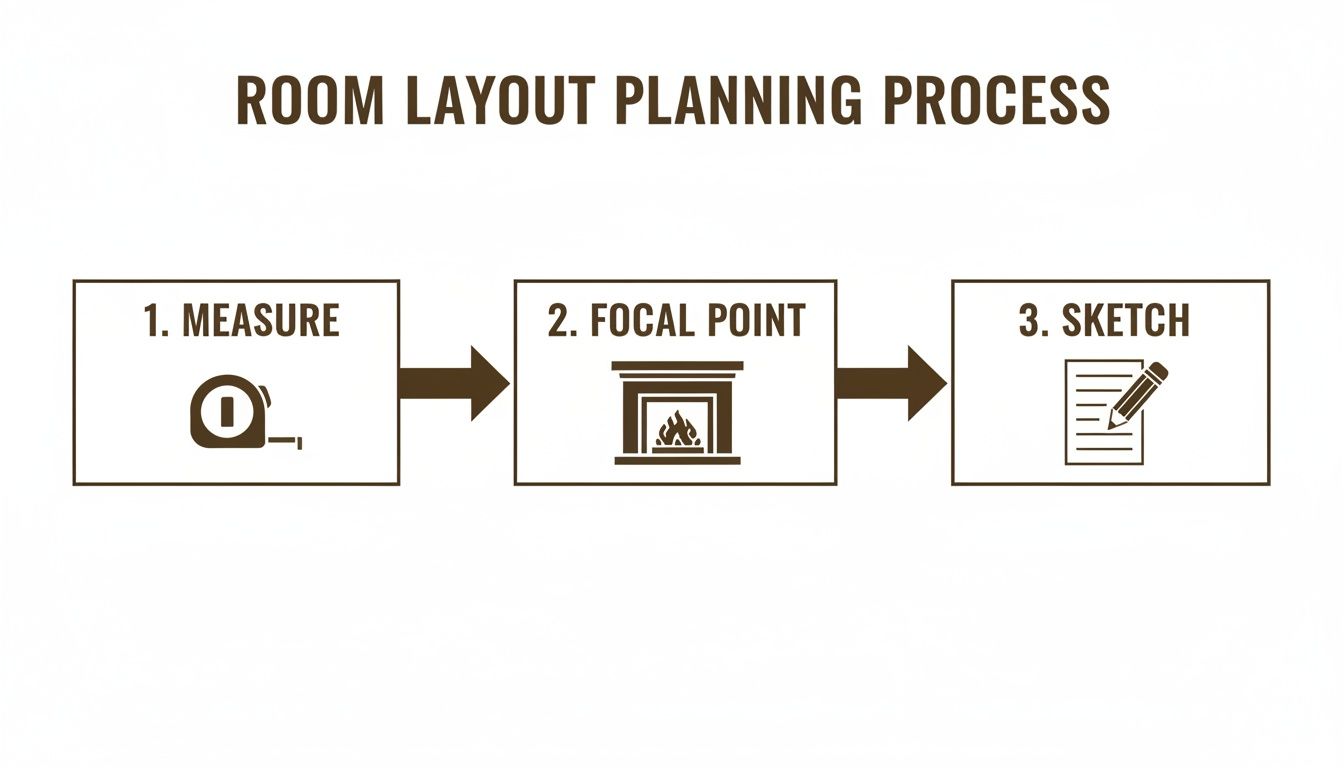
Following this measure, identify, and sketch process grounds your entire layout in the reality of your space, ensuring everything fits just right.
Before we dive into the details, here's a quick cheat sheet to get your head in the game.
Your Layout Quick-Start Guide
This table summarizes the core principles you'll need before you start rearranging. Think of it as your pre-flight checklist for a flawless layout.
| Core Principle | Why It Matters | Actionable Tip |
|---|---|---|
| Measure Everything | Prevents the dreaded "it doesn't fit" moment after you've already hauled it home. | Measure your room's length, width, and doorways. Then, measure the depth, width, and height of every major furniture piece. |
| Identify the Focal Point | Gives the room a sense of purpose and a natural anchor, making furniture placement intuitive. | Look for a fireplace, a large window, or a stunning art piece. If you don't have one, create one with a statement sofa or media unit. |
| Sketch It Out | Lets you test-drive different layouts without breaking a sweat or scratching the floors. | Draw your room's shape and use simple squares or cutouts to represent your furniture. Move them around to find the best flow. |
With these fundamentals in mind, you're ready to create a layout that feels both beautiful and livable.
Measure Twice, Move Once
First things first: grab your tape measure. You absolutely have to know the dimensions you're working with. Get the length and width of the room, but don't stop there. Jot down the locations and sizes of windows, doors, and any architectural quirks like a fireplace or built-in shelves.
Next up, measure your furniture. Every last piece. Get the width, depth, and height of your sofa, chairs, coffee table—everything. Having these numbers is non-negotiable. It’s what prevents that soul-crushing moment when you realize the perfect piece of consignment furniture from our Roswell store is two inches too wide for its intended wall. This is especially true for smaller rooms where every inch is precious.
Your tape measure is your best friend. A layout that looks amazing in your head might be a logistical nightmare in reality. Always, always confirm with cold, hard numbers before you start the shuffle.
Find Your Room’s North Star
Every beautifully designed room has a focal point. It’s the visual anchor, the first thing that catches your eye when you walk in. For many homes here in Roswell, Alpharetta, or Marietta, this is often a gorgeous fireplace, a big picture window with a great view, or some handsome built-in bookcases.
What if your room doesn't have an obvious one? No problem—create one yourself. A dramatic piece of art, a sleek media console, or even a show-stopping pre-owned designer sofa can easily become the star of the show.
Once you’ve locked in your focal point, arranging the main seating around it becomes so much easier. That one decision provides clarity for where everything else should go.
Get It Down on Paper
Now it’s time to put it all together. Using the measurements you took, draw a rough outline of your room on a sheet of paper. Be sure to mark where the doors and windows are. Next, you can either draw little boxes to scale or use paper cutouts to represent your furniture and start playing around.
Here’s a simple process to follow:
- Start with your biggest piece. That's usually the sofa. Place it on your sketch first, as it will dictate much of the layout.
- Bring in the other seats. Add your armchairs, loveseat, or any other seating. You’re aiming to create a shape that feels natural for conversation.
- Place the tables. Finally, pop in your coffee table and any side tables to complete the scene.
This method lets you experiment with tons of different layouts without any of the heavy lifting. You can instantly see how a certain arrangement impacts traffic flow and the overall feel of the room. It’s all about creating a space that works for you, whether you’re in Milton, East Cobb, or Forsyth County.
Create Pathways for Real Life
A gorgeous living room that’s impossible to walk through isn’t a living room—it’s a showroom. Your home is for living, which means you need clear, easy-to-navigate pathways for your real, everyday life. It’s all about mastering traffic flow.
This is a step people so often overlook. They get excited about finding pre-owned designer fashion and decor in Roswell but completely forget to consider how they’ll move around them. The result? Shin-level coffee tables creating an obstacle course and that awkward side-shuffle to squeeze behind a chair.
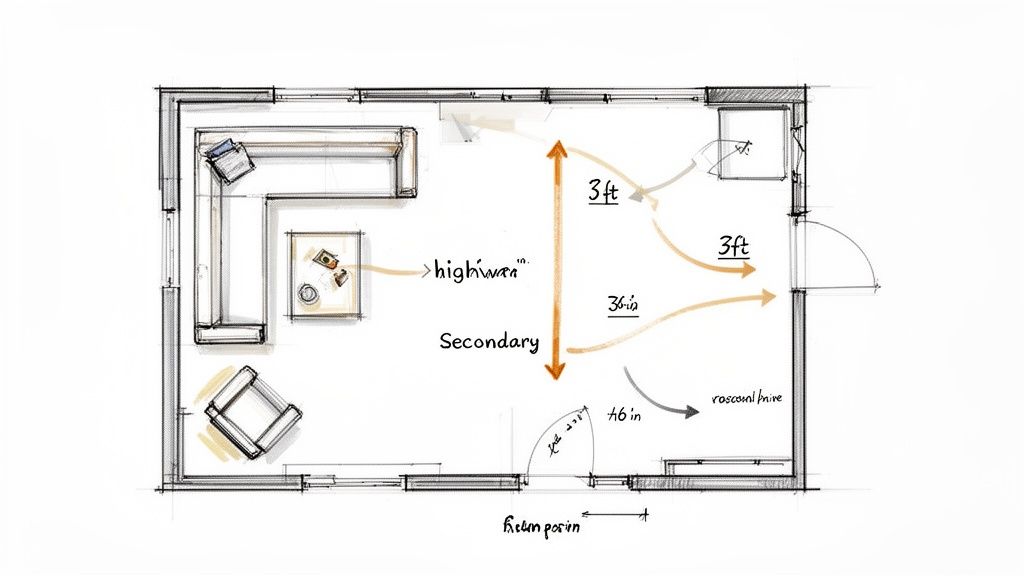
Thinking about your pathways beforehand ensures your beautiful room—whether you're in East Cobb or Cumming—is also a functional one. You're creating a space that actually works for movie nights, kids playing on the floor, and having friends over without constantly apologizing for bumping into things.
The Designer’s Rulebook for Spacing
Interior designers have a few key measurements they absolutely live by. These aren't just arbitrary rules; they're based on how real people actually move and interact in a space. Knowing them is like having a secret cheat sheet to a professional-looking layout.
Today’s living rooms are multitasking hubs for everything from entertaining to streaming and even remote work, which makes getting the spacing right more important than ever. Aim for 30–36 inches of width for your main traffic aisles and about 18–24 inches between a sofa and its coffee table. This gives you enough room to walk comfortably while still being able to reach your drink or the remote. For more professional insights, you can explore some great living room layout ideas.
These numbers give your room a natural, unforced flow. They prevent that cramped, cluttered feeling and make the whole space feel more intentional and generous.
A well-spaced room feels bigger, calmer, and more luxurious. Don’t think of it as empty space; think of it as breathing room that lets your beautiful consignment furniture shine.
Map Your Room’s Highways and Byways
Every room has its own road system with major and minor pathways.
-
The Highways: These are the main routes people take to get in, out, or through the room—think of the path from the hallway to the sliding glass door, or from the entryway to the kitchen. These need to be wide, clear, and totally unobstructed.
-
The Byways: These are the smaller paths within a specific zone, like the space between two armchairs or from the sofa to a side table. They can be a bit narrower, but you still need to be able to navigate them easily.
When you start arranging your furniture, try to keep those major "highways" from cutting directly through your main conversation area. Nobody likes having people constantly walk in front of the TV or between two friends having a chat. Pushing your main traffic flow to the perimeter of your seating group creates a much more intimate and less disruptive atmosphere.
Creating Smart Zones for Living
Once you start thinking about traffic flow, creating zones becomes the natural next step. A long, narrow living room in Milton, for example, is a prime candidate for zoning. Instead of one massive, undefined space, you can create distinct areas for different activities.
This is where you can get really creative and let the furniture define the space.
- The Conversation Zone: This is your primary seating area, anchored by a sofa and chairs. The paths here are all about easy interaction.
- The Reading Nook: A single, comfortable armchair with a good lamp and a small table creates a quiet escape with its own little pathway.
- The Entertainment Hub: This area is focused on the TV or media console. The key pathway is a clear shot from the seating to the screen.
By arranging furniture to create these zones, you're doing more than just placing objects; you're designing experiences. You’re building a space that adapts to your family's needs, whether you're in Marietta or Forsyth County. A beautiful piece of designer consignment from a trusted Roswell store like Board of Trade can become the perfect anchor for one of these zones, adding style and smart function all at once.
Layouts That Get People Talking
A living room shouldn't just look pretty—it needs to feel good. It should be the kind of place where people naturally gather and connect, not a cavern where you have to shout across a canyon of furniture to be heard. The secret to that warm, inviting vibe often comes down to one thing: arranging your seating to make conversation feel effortless.
It’s less about the specific furniture you own and more about where you place it. A few thoughtful adjustments can transform a stuffy, formal room into the go-to spot for family chats and catching up with friends.
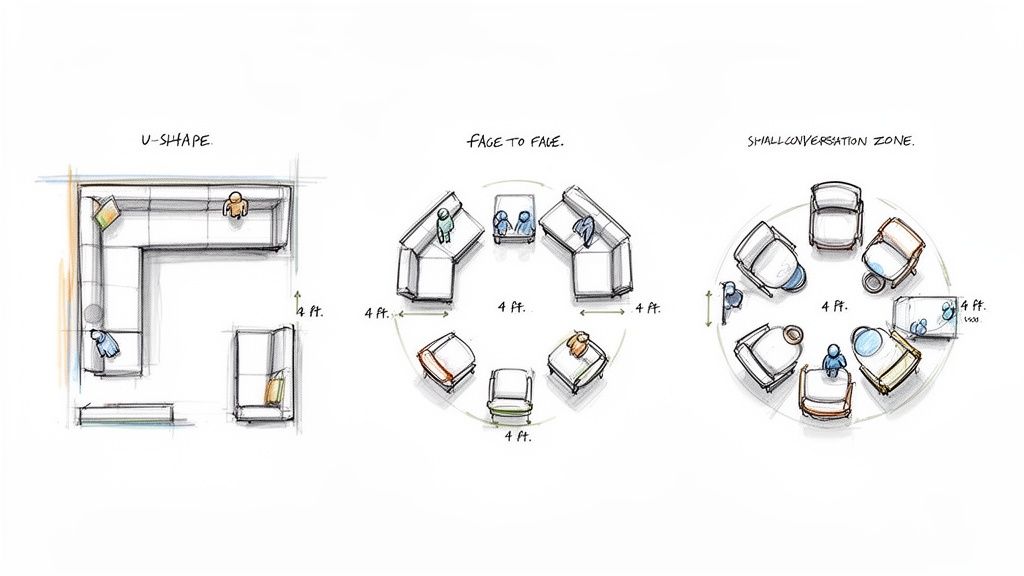
The real goal is to create an intimate but comfortable grouping where people can talk without raising their voices. It’s a subtle art, but it makes all the difference in how your room lives and breathes.
Finding the Conversational Sweet Spot
Ever been in a room where the chairs are so far apart you feel like you're on a deserted island? Or so close you’re practically in each other's laps? There’s a “just right” distance designers aim for, a perfect balance between intimacy and personal space.
To nail this, arrange your main seating so people are close enough to connect easily. As a general rule, the ideal distance between people for easy conversation is about 8 to 12 feet, with clear sightlines between them. This lets everyone talk at a normal volume. For a deeper dive, there's some great advice on arranging furniture in a long living room that really breaks this down. This one simple guideline helps ensure your layout feels cozy, not disconnected.
Tried-And-True Seating Arrangements
You don’t have to reinvent the wheel. There are a few classic, proven layouts that get people talking. The best one for your home in Roswell, Milton, or Marietta simply depends on your room's shape and how you actually use it.
Here are a few popular options that we see work time and time again:
- The Face-to-Face Layout: This one is a classic for a reason. Place two sofas (or a sofa and two chairs) directly across from each other. It’s perfect for spaces dedicated purely to conversation, creating a wonderful sense of symmetry and balance.
- The L-Shape Arrangement: A sectional sofa is a natural for this, but you can also create the same feel by placing a sofa and a loveseat at a right angle. This layout is great for opening up a room and works beautifully when you need to orient seating toward a focal point, like a fireplace or TV.
- The U-Shape Layout: For larger rooms in places like Forsyth County or East Cobb, a U-shape is fantastic for accommodating bigger groups. You can achieve this with a large sofa flanked by two chairs facing it, creating a defined, inclusive zone that wraps around a central point like a coffee table.
Think about how your family lives. Is your living room mostly for binge-watching shows, or is it where you host book club? Your answer will point you to the perfect arrangement.
The best layouts are flexible. Adding a pair of lightweight armchairs or a stylish ottoman gives you extra seating that’s easy to pull into the conversation circle when guests arrive. It’s all about creating a space that adapts to you.
Mix It Up for a Designer Vibe
Let's be honest, a room filled with a perfectly matched furniture set can sometimes feel a bit… boring. One of the best ways to create a dynamic, interesting space is by mixing different types of seating. Try pairing a plush, comfortable sofa with a couple of elegant, structured armchairs. The contrast adds visual texture and loads of personality.
This is where finding unique pieces at a trusted, local consignment store like Board of Trade really pays off. You can discover a vintage designer armchair with incredible lines or a unique bench that adds character a big-box store just can't match. Combining these curated finds with your existing furniture creates a layered, collected-over-time look that feels personal and high-end—like something you'd see in Avalon or Downtown Alpharetta, but with the smart value of consignment.
Visit us in Roswell! You’re not just buying furniture; you’re finding the designer consignment pieces that will make your living room the true heart of your home.
Anchor Your Space With Rugs And Lighting
You've got the furniture placed, and things are starting to take shape. Big win. But we’re not done yet.
Now it's time for the elements that pull it all together: the perfect rug and the right lighting. Think of these as the finishing touches that transform a room from just a collection of nice things into a cohesive, inviting space. This is where designers work their magic, and for good reason—it’s all in the details.
A rug that’s too small, for example, can make the entire living room feel disjointed. It's like putting a tiny picture frame around a grand piece of art. It visually shrinks your seating area and makes your furniture feel like it’s floating aimlessly. It’s one of the most common mistakes I see, but luckily, it's an easy one to fix.
Nail the Perfect Rug Placement
The whole point of an area rug is to define and anchor your main seating area. It’s the foundation for your conversational grouping. To get it right, there's a golden rule designers swear by.
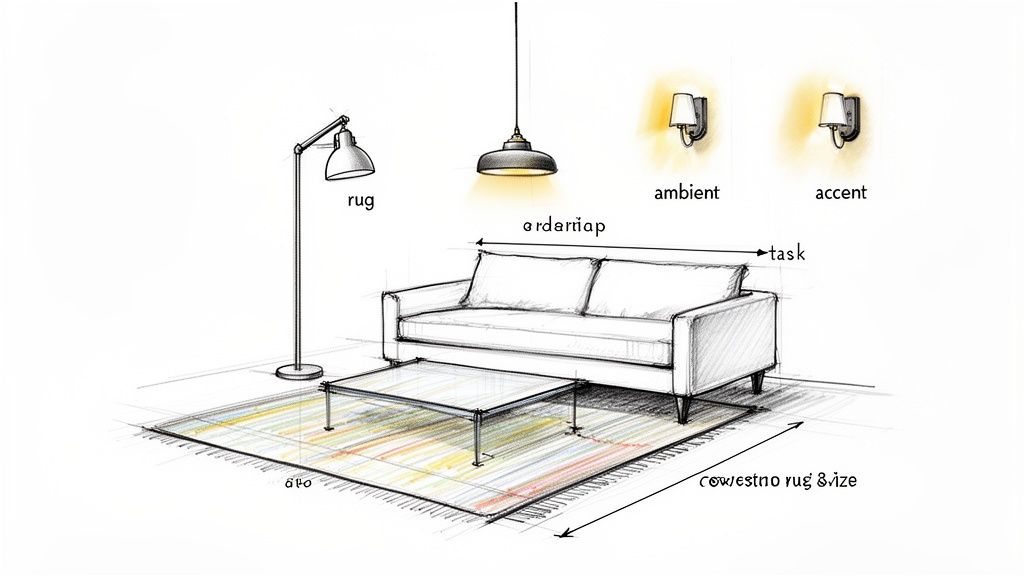
At a minimum, the front legs of your major seating pieces—your sofa, your armchairs—should sit comfortably on the rug. Ideally, you want to leave a border of about 12 to 24 inches of exposed floor around the edges of the rug. This frames the space beautifully and makes everything look more polished and intentional.
And once you find that perfect consignment rug, taking care of it is key. Knowing how to properly clean and maintain your area rugs ensures that your beautiful anchor piece keeps looking its best for years.
A well-chosen rug doesn't just sit there—it actively organizes your room. It creates a visual island that unites your seating, making the entire arrangement feel deliberate and harmonious.
Layer Your Lighting for Mood and Function
Alright, let's talk lighting. A single, harsh overhead light is the fastest way to make even the most stunning room feel flat and sterile. The secret is to layer your light. You want to combine different sources to create a warm, functional, and dimensional atmosphere.
Designers typically break this down into three essential types:
-
Ambient Lighting: This is your room’s overall illumination, often from a chandelier or recessed lights. It provides a comfortable base level of light, but it should never be your only source.
-
Task Lighting: Exactly what it sounds like. This is focused light for specific activities—a stylish floor lamp next to your favorite reading chair or a chic table lamp on a console table. It’s the practical workhorse of your lighting plan.
-
Accent Lighting: This is where the fun begins. Accent lighting highlights the things you want to show off, like a beautiful piece of art, an architectural detail, or that incredible sculpture you found at Board of Trade. Think picture-mounted lights or small uplights.
By layering these three types, you create a rich glow that can be adjusted for any occasion. This approach not only makes your Forsyth County or East Cobb home more functional but also highlights the character of your curated consignment pieces.
For more inspiration, check out our guide to luxury home decor ideas. Better yet, drop by our Roswell showroom. It's the best way to discover unique lamps and art that give you that high-end Downtown Alpharetta look at a much smarter value.
Style Your Room With Consignment Finds
Now we get to the fun part. You’ve done the hard work—the measuring, the planning, the furniture Tetris. This is the moment you get to breathe life and personality into the space, transforming a well-arranged room into a home that truly feels like you.
This isn't about creating a carbon copy of a catalog. It's about styling with character and telling your story.
And the absolute best place to find that kind of character is a top-tier consignment store. When you bring in pieces from a curated spot like Board of Trade, you're not just buying decor; you're acquiring history, quality craftsmanship, and that one-of-a-kind feel. It's the secret to getting that high-end designer look you see in Avalon or Downtown Alpharetta, but with the smarts and sustainability of pre-owned gems.
Mix Styles Like a Pro
One of the tell-tale signs of a professionally designed room is the confidence to mix different styles and eras. A space where every single piece is part of a matching set can feel a bit predictable, even flat. The real magic happens when you pair a sleek, modern sofa with a vintage mid-century armchair or hang an ornate, traditional mirror over a clean-lined console.
The key is finding a common thread to tie it all together. It’s easier than it sounds. Look for:
- A Consistent Color Palette: A modern chair and a traditional side table instantly feel like they belong together if they share a similar wood tone or color family.
- Shared Lines or Shapes: Notice how the curve of a sofa's back can echo the rounded edges of a modern coffee table? Those subtle connections create a quiet harmony.
- Balanced Scale: You don't want one style to completely overpower the other. Try mixing larger and smaller pieces from different eras to create visual rhythm without descending into chaos.
This eclectic approach is what gives a room its soul. It shows off your personal taste, not a retailer’s showroom floor.
Balance Statement Pieces With Quiet Moments
When you find that jaw-dropping piece at a designer consignment store—a brightly colored velvet sofa, an antique armoire, or a uniquely shaped bookcase—let it be the star of the show. Your job is simply to give it the stage. Don't clutter the area around a bold statement piece with other items screaming for attention.
Instead, create balance. Pair your statement sofa with a simple, neutral coffee table and understated side chairs. Let a dramatic piece of art command the wall, keeping the surrounding decor minimal. This creates visual "breathing room" and ensures your prized find gets the spotlight it deserves. The goal is a dynamic rhythm—bold focal points supported by quieter, elegant moments.
Choosing pre-owned designer fashion and decor from a curated collection is about more than just getting a good deal. It’s about adding layers of history and craftsmanship to your space, ensuring your home feels anything but cookie-cutter.
Accessorize With Intention
Accessories are the final, essential layer that makes a room feel complete and lived-in. But this isn't about adding clutter; it's about thoughtful curation. Think of your coffee table, bookshelves, and console as mini-canvases where you can tell small stories.
A few tips for styling like a designer:
- Vary Height and Scale: On a coffee table, group a short stack of beautiful books with a tall vase and a smaller decorative object. It creates a much more interesting visual landscape.
- Work in Threes (or Fives): Grouping items in odd numbers is a classic design trick. It just feels more natural and balanced to the human eye.
- Mix Textures: Combine smooth ceramic, rough-hewn wood, shiny metal, and soft textiles. This adds a depth and tactile appeal that makes a space feel rich and inviting.
- Use Mirrors Strategically: A well-placed mirror does so much more than just reflect your outfit. It bounces light around your Marietta or Alpharetta home, making the space feel brighter and significantly larger. Try positioning one opposite a window to really maximize that natural light.
Sourcing these finishing touches is one of the best parts of exploring a quality consignment shop. You can discover unique art, vintage lamps, or designer decor that you simply won't find anywhere else. For more ideas on finding these special items, our guide on the best furniture consignment stores is a fantastic resource.
Ready to find the pieces that will complete your vision? Drop by our showroom in Roswell. It’s an easy trip from anywhere in Milton, East Cobb, or Forsyth County. Come browse our racks and find the designer furniture and decor that will turn your perfectly arranged living room into a truly extraordinary home.
Your Top Furniture Questions Answered
At our Roswell consignment store, we talk to people from all over North Atlanta—from Milton to East Cobb—who are looking for that perfect piece of men’s or women’s designer fashion, decor, or furniture. Once they find it, the next question is always the same: how do I make this work in my space?
It’s one thing to find a stunning pre-owned designer sofa, but it's another to make it feel at home. These questions come up again and again, and thankfully, the solutions are often simpler than you think.
How Do I Arrange Furniture In a Long, Narrow Living Room?
This is a classic layout challenge. The biggest mistake we see is people creating a "bowling alley" effect by pushing everything up against the two long walls. It just emphasizes the awkward shape and makes real conversation impossible.
The key is to break the room into smaller, distinct zones.
Instead of one long seating area, think in multiples. You could create a main conversation zone at one end with a sofa and two armchairs. Then, at the other end, maybe a stylish desk or a cozy reading nook with a single plush chair and a lamp. Using different area rugs for each zone is a fantastic trick to visually separate them, making the entire room feel more balanced and intentional.
What Is the Single Most Important Rule of Furniture Placement?
If you only remember one thing from this guide, let it be this: start with your focal point.
A focal point gives your room an immediate sense of purpose and acts as a natural anchor for your entire layout. It's the first thing your eyes are drawn to when you walk in—a fireplace, a large picture window, or even a bold piece of art.
Arrange your main seating pieces to either face or center around this point. Your sofa, for instance, should be positioned to take full advantage of that gorgeous fireplace or window view. Once you’ve established this primary relationship, all your other placement decisions, like where to put side tables and accent chairs, suddenly become much easier.
"A room without a clear focal point is like a conversation without a topic. It wanders aimlessly. By defining that one key feature, you give every other piece of furniture a reason to be where it is."
How Can I Make a Small Living Room Look Bigger?
Making a small living room feel more spacious isn't about magic; it's about creating smart illusions. A few simple tricks can make a huge difference in how open and airy your space feels.
Here are three of our go-to strategies:
- Choose Furniture with Legs: Sofes, consoles, and chairs with exposed legs are your best friends. By allowing you to see the floor underneath, they create a sense of openness and light, preventing the room from feeling weighed down.
- Pull Furniture Away from the Walls: This sounds counterintuitive, I know. But pushing furniture right up against the walls can actually make a room feel more cramped. Leaving just a few inches of "breathing room" creates an illusion of more space.
- Use Mirrors Strategically: A large mirror is a classic trick for a reason—it works. Placing a mirror opposite a window is a brilliant way to reflect natural light and the view, instantly making your Marietta or Alpharetta home feel brighter and more expansive.
These tips help you maximize both the style and the perceived size of your room, proving you don't need a huge footprint to have a big impact.
Ready to find the unique, high-quality pieces that will bring your perfect layout to life? At Board of Trade Fine Consignments, our 10,000 sq ft showroom in Roswell is filled with curated designer consignment from women’s and men’s fashion to furniture and home decor. If you’re searching for “consignment near me” in Roswell, Milton, Alpharetta, or East Cobb, we’re a convenient, must-see destination. Find your next designer piece today! https://www.goboardoftrade.com